

NaviTrack Scout® Locator

NaviTrack Scout® Locator

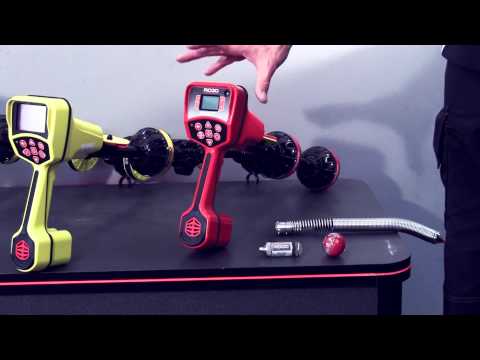
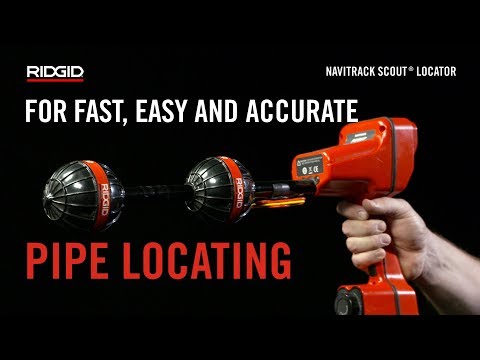
The NaviTrack Scout® Locator is designed to solve the most demanding remote transmitter (sonde) locates using multi-directional locating technology.

The NaviTrack Scout Locator is designed to solve the most demanding remote transmitter (sonde) locates using multi-directional locating technology. The NaviTrack Scout multi-directional antenna technology sees the entire signal all of the time. Simply maximize the signal strength and you have found the target. No nulls or false peaks to complicate the locate. Depth is automatically calculated and displayed when over the target.

The NaviTrack Scout® multi-directional antenna technology sees the entire signal all of the time. Simply maximize the signal strength and you have found the target. No nulls or false peaks to complicate the locate.

Accuracy

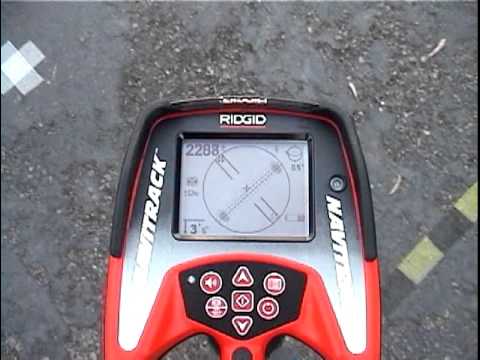
This locator verifies the locate position using a micro-mapping display to mark distinctive poles in front of and behind the target, insuring an accurate locate.

Automatic Depth

Depth is automatically calculated and displayed when over the target.

Show Less
Read More

Specifications

Weight 3 lbs (1.4 kg).
Power Source 4 C-Cell batteries or Rechargeable RIDGID® Professional 18V battery with RIDGID® SeekTech® 18V Adaptor (optional).
Battery Life Varies with battery rating, use and operating factors. Four size C, alkaline batteries provide approximately 12 to 24 hours.

Standard Frequencies

Sonde 512 Hz, 640 Hz, 874 Hz and 33 kHz.
Line Trace 128 Hz, 8 kHz and 33 kHz.
Passive AC Line Trace 60 Hz, 50 Hz.
Meets FCC Class B and EN 55022 Class B requirements.

Ordering Information

{{model}}
Catalog Number Description Weight
lb. kg
19243 NaviTrack Scout® Locator  3,00  1,4  Shop Now
Accessories
{{model}}
Catalog Number Description Weight
lb. kg
16728 Remote Transmitter, 512-AAA  0,40  0,18  Shop Now
Replacement Parts
{{model}}
Catalog Number Description Weight
lb. kg
12543 Marker Chips and Clip  Shop Now
20248 Scout Carrying Case  6 1/4  2,80  Shop Now

FAQ

  • Will the NaviTrack Scout work with Ridgid SeeSnake cameras/reels?

    Yes. The NaviTrack Scout detects the inline 512 Hz sonde/transmitter used in Ridgid SeeSnake reels, so it will locate the camera head on compatible reels (including the 63813, 63828, 63603 and other Seesnake reels that include the 512 Hz transmitter). If your SeeSnake has an inline transmitter/sonde, the Scout will locate it; older reels without a transmitter will not be locatable by the Scout.

  • Does the NaviTrack Scout work with line transmitters like the ST-305 or ST-510?

    Yes. The Scout will work with line transmitters, but you must match the frequencies between the transmitter and the locator. The ST-305 and ST-510 are compatible; for example the ST-510 will work in direct-connect mode on frequencies the Scout supports (128 Hz, 8 kHz and 33 kHz), and the ST-305 pairs well with the Scout because they share the same frequency options.

  • Do I need a transmitter to locate plastic (PVC) or non‑metallic buried lines, irrigation, gas tracer wire, phone, sprinkler lines, or drain tile?

    The NaviTrack Scout requires a signal to locate a line. For non‑metallic pipes (PVC, plastic) you need either a tracer wire already attached or an active sonde/transmitter installed in the line (for example in a camera head) or a line transmitter connected to a metallic tracer or a conductor placed in the pipe. Inductive coupling or using a transmitter on a fish tape can sometimes work but is not optimal and may be difficult to complete the circuit; metallic lines can be traced by direct connection or clamp. If the line has no tracer or transmitter, the Scout cannot detect it.

  • How deep can the NaviTrack Scout locate sondes or traced lines?

    Actual depth and accuracy depend on many factors including the transmitter power, frequency, soil type and moisture, pipe material, nearby conductive lines, concrete and rebar, and electromagnetic interference. In difficult environments (cast iron buried in concrete, heavy interference) effective depth and signal strength will be reduced and depth readings may be less accurate.

  • Can the Scout locate sondes or transmitters in steel/cast‑iron pipes, concrete, or when the pipe is full of water?

    The Scout can locate a sonde inside most pipe materials and it will detect a submerged camera/transmitter—the sonde’s signal is not diminished just because the pipe is full of water. Wet or damp ground affects line tracing more than sonde detection; locating the inline sonde is generally less affected by surface moisture. Locating through cast iron or through concrete with rebar is more challenging and will reduce signal strength and depth accuracy, so expect weaker reads and shorter effective depth in those conditions.